Yanagida Seisakusho Co., Ltd.
- Machining
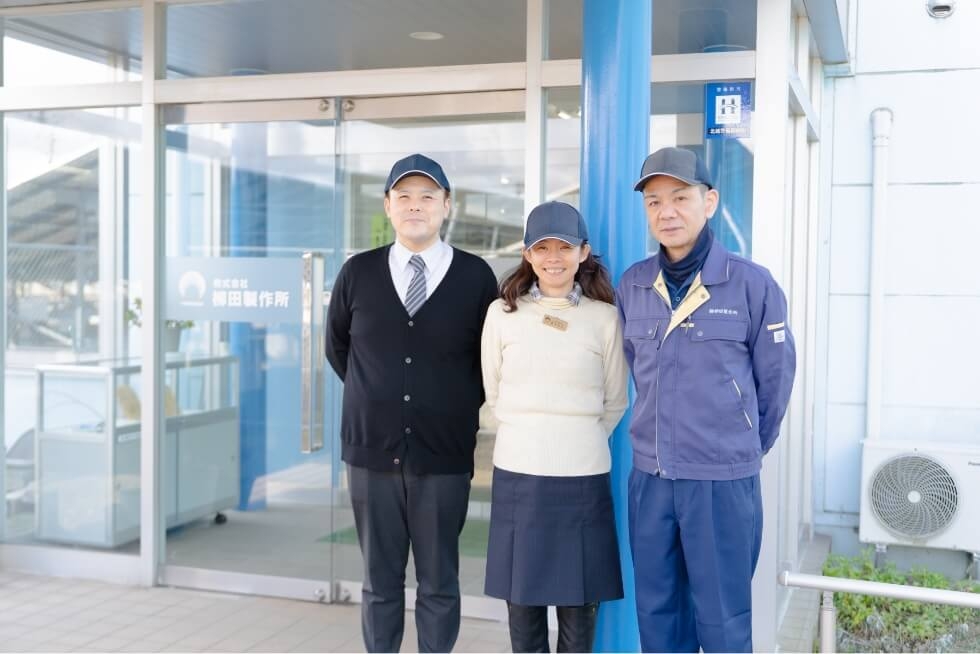
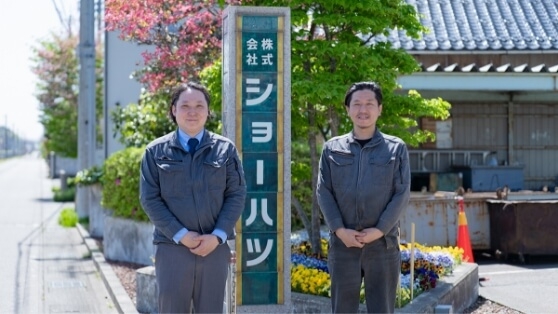
(Right) Mr. Shinji Takeda, Executive Officer, Factory Manager
(Center) Ms. Ryoko Hashimoto, Managing Director
(Left) Mr. Ryosuke Yokoyama, Manager, System Section, General Affairs Department
About the Client
Yanagida Manufacturing Co., Ltd. is a job shop serving a diverse network of approximately 2,000 clients across various industries. About 90% of their main products processed by Shibuya laser machines are "metal shims"—height adjustment plates essential for machinery assembly and calibration. Since its founding, the company has prioritized one thing above all else: defending "ultra-short lead times," with delivery typically within 2–3 days and, at fastest, on the same day. Even for demanding requests that would take competitors a week, they never say "no," driven by a profound mission to ensure that Japan's manufacturing sites never grind to a halt.
Previously, the company introduced our first laser machine to bring ultra-thin plate processing—which had been outsourced—in-house. This time, to maintain those "ultra-short lead times" while handling a surge in orders, they introduced a second machine to dramatically boost production efficiency.
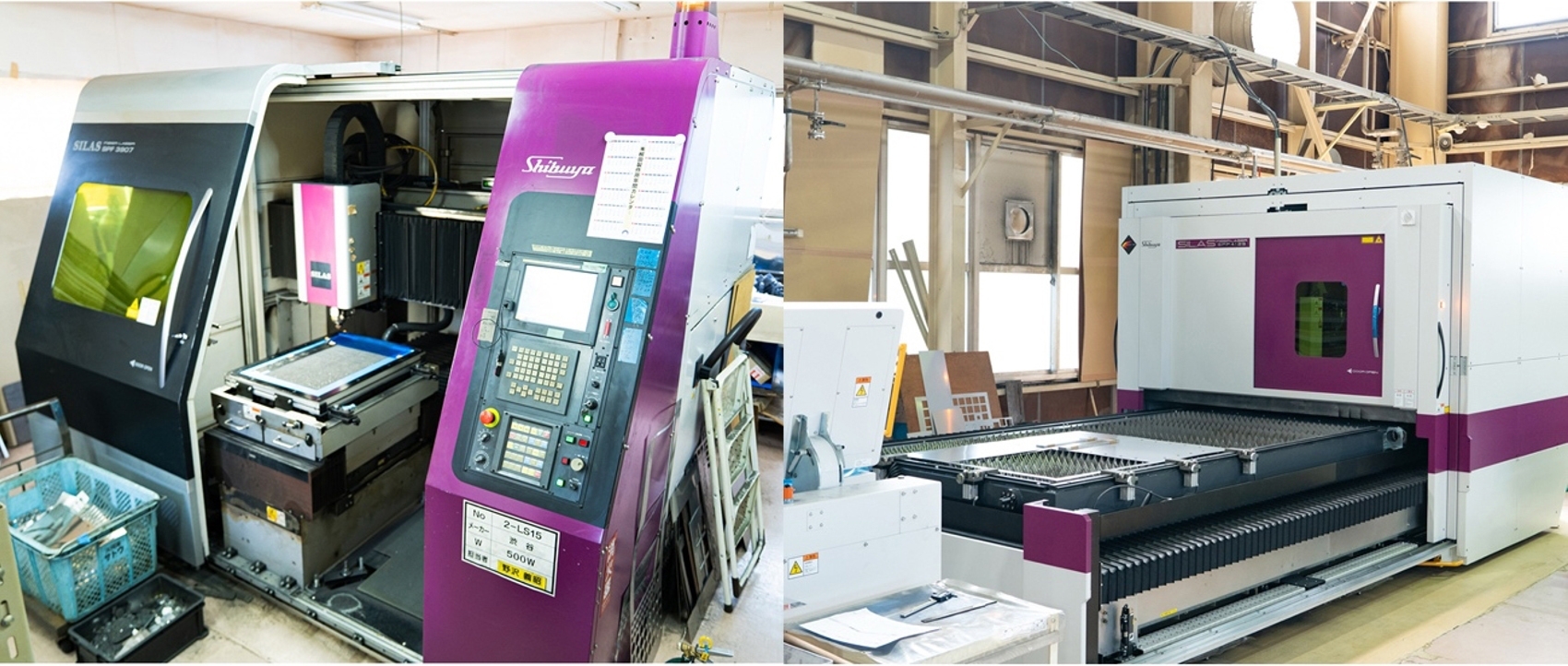
(Right) Machine 1: SPF3907 / SFX500 (500W) – Installed June 2019
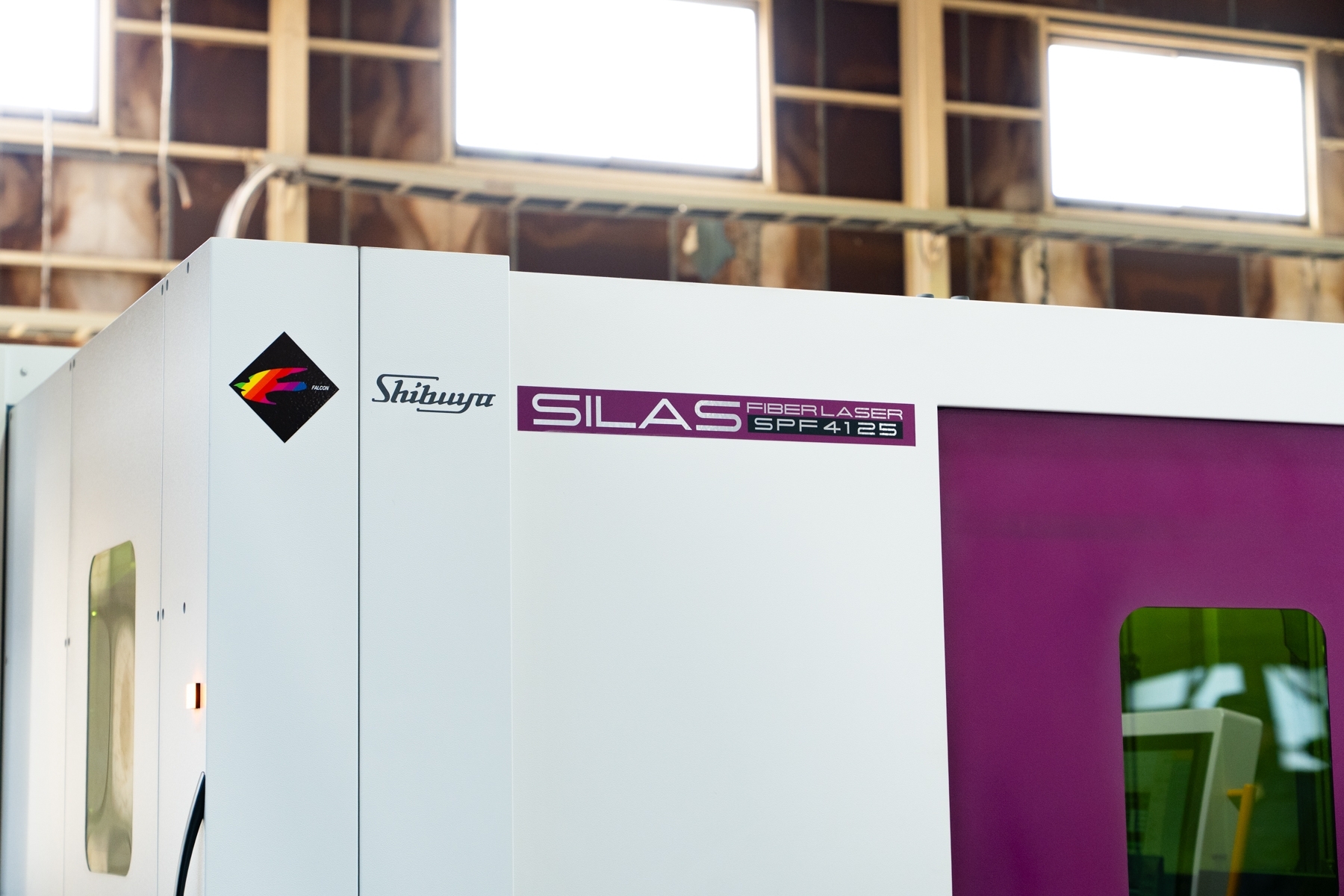
(Left) Machine 2: SPF4125 / SFX2000D (2kW) – Installed December 2025
Pre-Installation Challenges
Reliance on Outsourcing and the Crisis of Maintaining "Ultra-Short Lead Times"
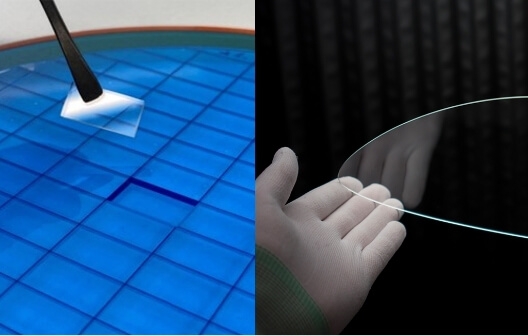
When we were first consulted, the biggest hurdle the company faced was the inability to complete ultra-thin plate processing (under 0.1mm thickness) in-house. With their existing high-power machines, the heat would cause the thin plates to warp "like dried squid," creating a physical limit that forced them to rely on outsourcing. This dependency naturally caused time losses, threatening the company’s core value of ultra-short delivery. To break through this limit, they first introduced our 1st machine, successfully bringing thin-plate processing in-house.
However, as client demands became more sophisticated and the volume of in-house work grew, they faced a new wall: micro-processing became heavily concentrated on that single 1st machine. Managing a wide variety of products on limited equipment led to bloated setup times for material changeovers. There was a growing sense of urgency and a heavy dilemma on the floor: "At this rate, we might not be able to meet the strict deadlines our customers demand." As a machine manufacturer, we took this pain as our own and began exploring the next solution together.
Key Deciding Factors
Precision to Solve "Thermal Warpage" and Deep Trust in Shibuya
The key to further breaking these limits was our proposal for a 2nd machine designed for overwhelming efficiency. When considering the 1st machine, the client had already seen our processing samples—such as involute gears with 0.5mm holes—and expressed absolute confidence: "Shibuya's ultra-small diameter beam can perfectly handle thermal warpage in ultra-thin plates."
For the 2nd machine, we proposed a design that inherits this proven precision while featuring a large processing area (4x8 size) to significantly reduce the frequency of material changeovers. Furthermore, despite the large table, we kept the design compact to avoid crowding the limited factory space—a solution derived from our deep understanding of the site's workflow, gained through numerous visits.
"With this two-machine setup, we can definitely handle the surge in orders while protecting our greatest strength: ultra-short lead times."
The proven track record since the 1st machine and Shibuya’s technical expertise became the catalyst for this new challenge.
Implementation Benefits
Eliminating Bottlenecks and Capturing Orders from "Unknown Territories"
Today, with the 1st and 2nd machines operating in parallel, the company has achieved an unprecedented range and speed—covering everything from micro-thin plate processing to thick plates. The bottleneck on the 1st machine has been eliminated, and setup times have been slashed. We have heard vibrant feedback from the craftsmen: "We can now accept complex jobs we used to turn down due to equipment limits," and "Our range of work has expanded dramatically."
Beyond the basic performance of the machines, our support system has also received high praise. Even if a problem occurs, they appreciate our speed: "One call, and they fly in the same day to restore operations." We are not just an equipment vendor that "sells and leaves"; we are partners striving for business growth together. Our commitment to protecting their production line provides the client with absolute peace of mind.
Beyond Vendor and Client: Moving Toward a Relationship of Co-Evolution
By acquiring overwhelming micro-processing technology and a high-efficiency production system, the company is now seeing an increase in inquiries from entirely new sectors, such as semiconductor-related industries, that were not part of their 2,000-company network. Challenging new markets naturally raises the bar for equipment requirements. We frequently receive requests from the front line: "Shibuya, can we make the interface more user-friendly in this way?"
We absorb all these voices and exchange ideas on both hardware and software. Moving beyond the framework of "manufacturer and customer," this relationship of pushing each other's limits is the essence of our "Dantotsu Co-Evolution." To support the further leap of Yanagida Manufacturing—a company that supports the foundation of Japanese manufacturing—we are committed to evolving together.
Case Studies
Showcasing DANTOTSU* product installations and real customer feedback.

Insights
Our ongoing commitment to pioneering the future of technology.