Syohatsu Co., Ltd
- Machining
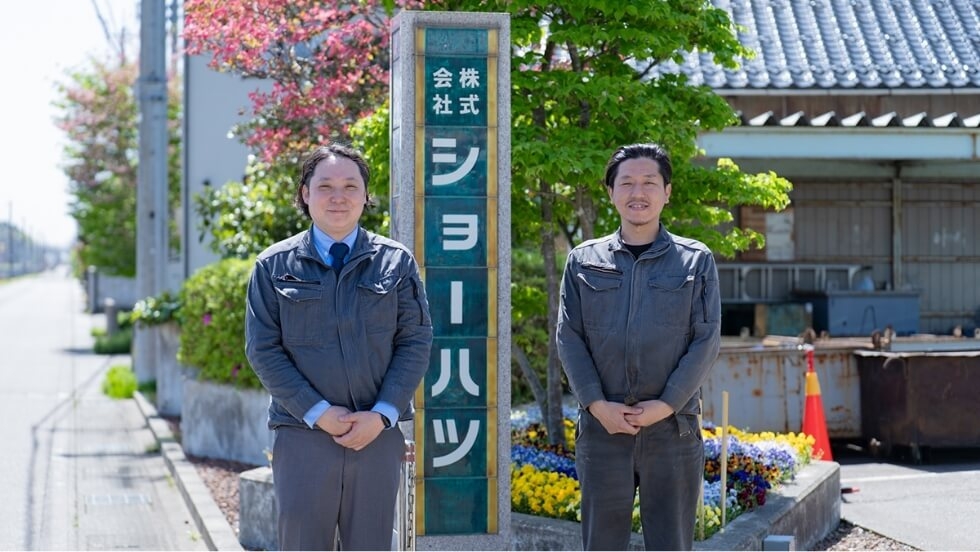
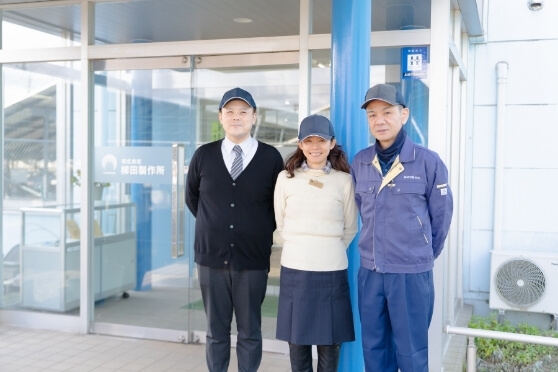
(Left) Mr. Masato Mizushima, President and Representative Director
(Right) Mr. Yusuke Kameda, Factory Manager
About the Client
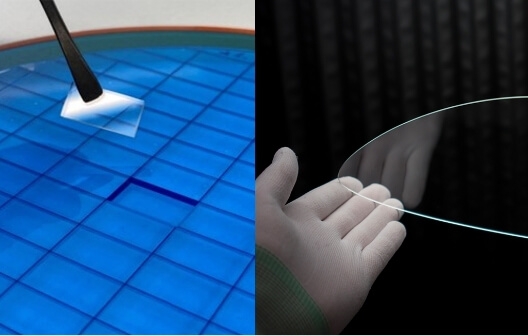
Shohatsu Co., Ltd. specializes in manufacturing small components for construction machinery and ultra-thin shim (SHIM) products for industrial machinery. Based in Ishikawa Prefecture, the company has built a comprehensive system capable of handling a wide range of detailed processes—from laser cutting based on blueprints to bending and press working.
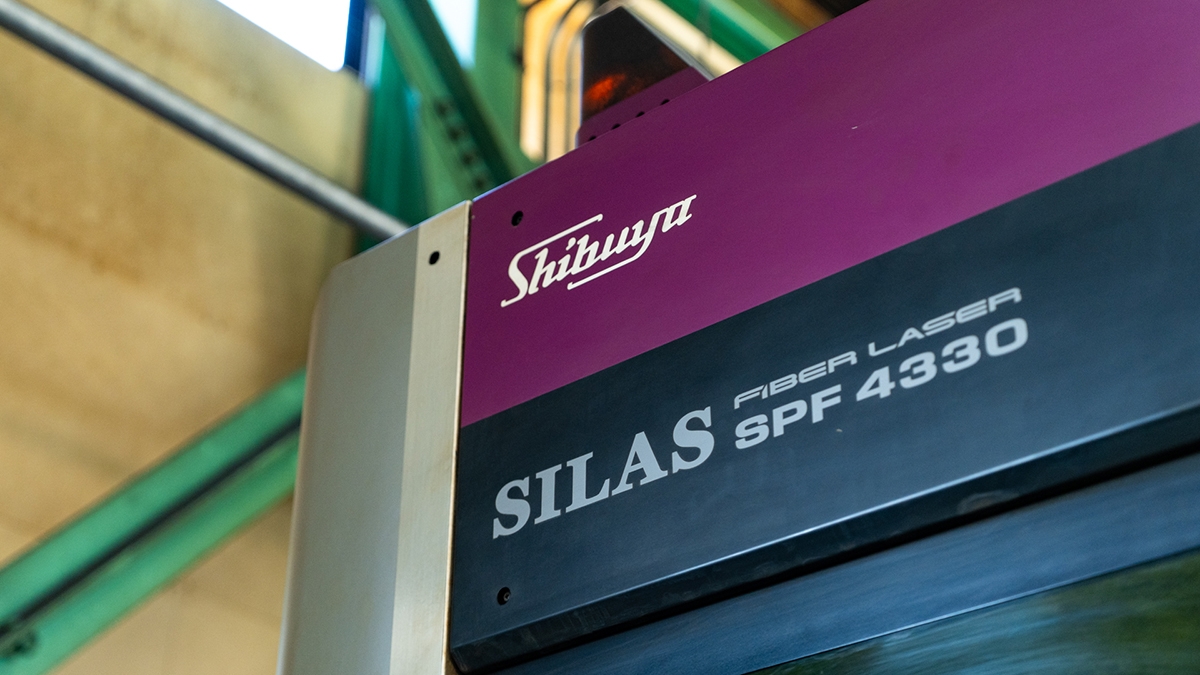
While they initially focused on thin-plate products, they have expanded their capabilities to meet the diverse needs of their clients. Today, all 13 cutting machines operating in their factory—including fiber laser machines, waterjets, and hydrogen gas cutting systems—are Shibuya Corporation systems.
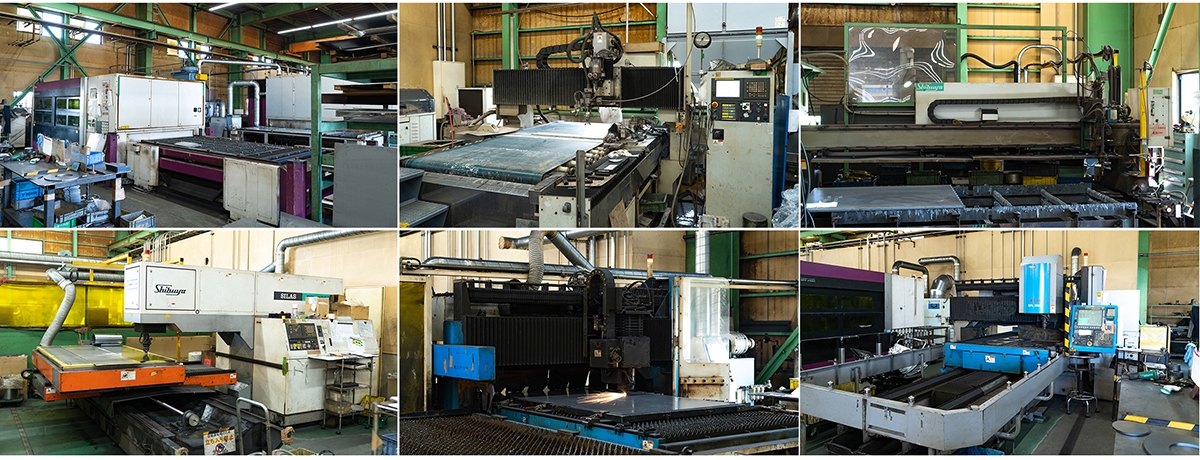
(Top Left) 4 Fiber Laser Cutting Machines
(Top Center) 1 Waterjet Cutting Machine
(Top Right) 1 Hydrogen Gas Cutting System
(Bottom) 7 Gas Laser Cutting Machines
Pre-Installation Challenges
The Limits of "Turret Punching" 28 Years Ago and the Start of the Ultra-Thin Challenge
The partnership between Shohatsu and Shibuya dates back to 1998, 28 years ago, with the installation of their first laser cutting machine. At that time, turret punch presses were the mainstream in sheet metal processing. However, there were physical limits to what punching could achieve for the ultra-thin shim products and complex, delicate shapes Shohatsu’s clients demanded.
The impact of punching would often warp the material, and mold constraints made it impossible to cut specified shapes. This frustration—of being unable to fully meet sophisticated client requirements—became the primary catalyst for exploring new processing technologies.
It was during this search that they encountered Shibuya’s laser cutting machine at an exhibition. Using light to cut eliminated physical impact on ultra-thin materials and removed the need for molds. Seeing Shibuya’s expertise in micro-processing, the long history of "Co-Evolution" between the two companies began.
Key Deciding Factors
A Support System for Factory Resilience that Never Divides Responsibility
The reason Shohatsu has unified all 13 of its cutting machines with Shibuya systems is not only the processing precision but also the highly praised support system that keeps their operations running.
In an environment with equipment from multiple vendors, identifying the cause of a malfunction takes time, and manufacturers may shift responsibility to one another. Machine downtime is a critical issue that directly affects the client’s business. For this reason, Shohatsu aimed to consolidate their equipment with a single point of contact: Shibuya.
We are committed to the principle of "immediately rushing to any site facing trouble." We don't just deliver a machine and leave; we continuously accompany our customers in their business growth. This stance has been the firm foundation for Shohatsu entrusting their factory's fate to us for 40 years.
Implementation Benefits
Eliminating Dependence on Individual Skills and Establishing Absolute Trust
The precise control of Shibuya’s equipment has brought tangible changes to the shop floor. For example, even in the extremely delicate processing of 0.003mm ultra-thin materials, the system maintains stable reproducibility once the initial offset is set. As a result, even new employees with less than a year of experience can perform design processing with the same high precision as a veteran craftsman. This shift away from individual-dependent skills has improved productivity and allowed younger staff to excel early in their careers.
This stable operation is supported by Shibuya’s generous sharing of technical know-how. When Shohatsu faces challenges with special materials, Shibuya provides optimal processing parameters based on data from past test cuts, including cases from other clients. For entirely new challenges, we conduct tests at our own factory and return the validated data. This "partner-like" approach—saving the client the trouble of experimenting in-house and providing ready-to-use data—is why Shohatsu values us as "colleagues walking together."
Future Outlook
"Use us as your testing ground"—The Heat of Endless Co-Evolution
"Moving forward, we want to improve the efficiency of the entire factory, including workflow, not just individual machine performance." Shohatsu is looking toward the next stage: total optimization including peripheral equipment like robots and human movement. They have expressed strong expectations for Shibuya to tackle these difficult challenges alongside them.
Furthermore, regarding the testing of new techniques, components, and durability, the client spontaneously offered: "Please use our factory as a testing ground for the actual machines." This willingness to share information and evolve together to improve their own technical capabilities is the very embodiment of "Co-Evolution." The challenge between Shohatsu and Shibuya to continue breaking through limits will go on.

Sample processing by Shohatsu Co., Ltd.
Case Studies
Showcasing DANTOTSU* product installations and real customer feedback.

Insights
Our ongoing commitment to pioneering the future of technology.