As environmental issues affect the very foundations of human life and are recognized as one of the most important challenges facing all humankind, companies are increasingly expected to take action to prevent global warming and help build a circular economy. To fulfill these social responsibilities, we have positioned global environmental conservation as one of our key management priorities. We are working to reduce environmental impact in all aspects of our business activities and to develop environmentally conscious products.
Green Procurement Guidelines (PDF: 179KB)
These guidelines set out the basic approach of the Mechatronics Administration Division (“the Division”) to green procurement, meaning the purchase of materials with lower environmental impact, and are intended to support the continuous improvement of this initiative through closer collaboration with our business partners.
These Guidelines apply to the procurement of materials—including parts, materials, products, auxiliary materials, and consumables—used in products manufactured and sold by the Division. Office supplies, such as stationery, are outside the scope of these Guidelines.
In selecting business partners, we conduct the following environmental assessments, in principle once a year, in addition to our traditional selection criteria such as quality, delivery, and price, and evaluate them comprehensively.
These guidelines clarify prohibited substances, substances subject to conditions, and exempted items with respect to chemical substances contained in materials—including parts, materials, products, auxiliary materials, and consumables—used in products manufactured and sold by the Division.
By communicating these requirements thoroughly within the Division and cooperation from our business partners, we aim to improve the environmental quality of our products and reduce impacts on the global environment and ecosystems.
List of Substances of Environmental Concern[PDF: 205KB]
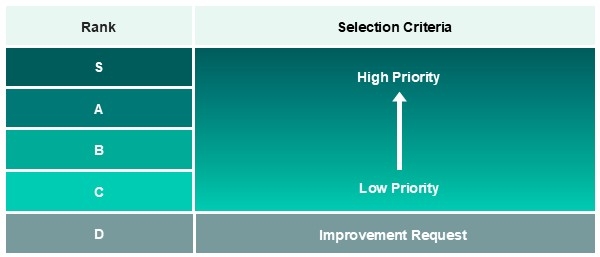
Based on the total score derived from the above evaluation criteria, suppliers are categorized into ranks, and priority is given to procurement from higher-ranked suppliers.