At a meeting of the Board of Directors held on February 10, 2023, the Company resolved to disclose information based on the recommendations of the Task Force on Climate-related Financial Disclosures (TCFD). Accordingly, we support the TCFD recommendations and disclose climate-related information as follows.
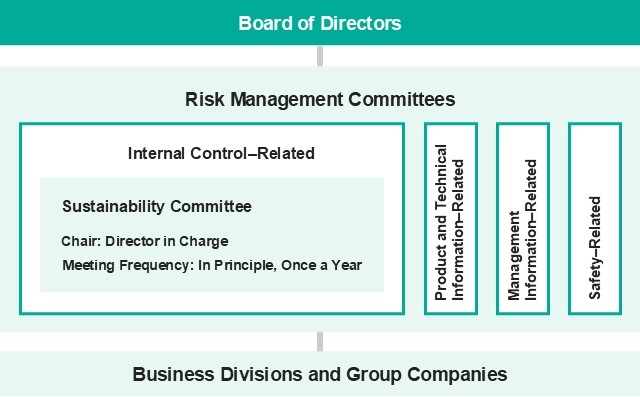
Matters related to sustainability, including climate change, are discussed and reviewed by the Sustainability Committee, which is chaired by the director in charge. The Sustainability Committee has been established as one of the committees within the Group’s internal control system, and matters discussed and reviewed by the Committee are reported to the Board of Directors at least once a year. To help realize a sustainable society, the Board of Directors has approved the Basic Sustainability Policy of the Shibuya Group. Going forward, the Committee will continue to consider specific initiatives and policies, including measures to address climate change.
In identifying climate change-related risks and opportunities, we conducted a scenario analysis for 2030, given that Japan has set 2030 targets aligned with achieving carbon neutrality by 2050. In this analysis, we used scenarios published by the Intergovernmental Panel on Climate Change (IPCC) and the International Energy Agency (IEA), and conducted both quantitative and qualitative assessments under two scenarios: a 4°C scenario, in which the global average temperature is projected to rise by around 4°C by 2100 compared with pre-industrial levels, and a 1.5°C scenario, in which temperature rise is limited to 2°C or below through efforts toward carbon neutrality.
Under the 4°C scenario, we anticipate direct impacts on our production sites and logistics resulting from the increasing severity of extreme weather events such as typhoons, heavy rainfall, and heavy snowfall. Among these risks, we have quantitatively assessed potential damage from floods and storm surges at the time of a disaster, with reference to the Manual for Economic Evaluation of Flood Control Investment published by the Ministry of Land, Infrastructure, Transport and Tourism. We also expect water supply needs and demand for water-saving measures to increase as drought impacts expand, particularly outside Japan. In response, we recognize that improving the environmental performance of our products can contribute to both adaptation to and mitigation of global climate change, and we see this as an opportunity to contribute to society.
Under the 1.5°C scenario, on the other hand, we anticipate that the introduction of carbon pricing will have a direct impact on us. We also recognize the possibility that prices for materials such as iron, copper, and aluminum used in our products may rise, although our quantitative analysis suggests that the impact would be relatively limited. At the same time, we expect demand for decarbonization-related products to grow. In particular, we recognize that improving the resource- and energy-saving performance of our products, reducing environmental impact across the entire life cycle including the material procurement stage, and advancing technical initiatives with a view to using recycled materials will contribute to the creation of new opportunities and the expansion of our business.
| Item | Impact as of 2030 | 4°C Scenario | 1.5°C Scenario | Reference Scenarios | ||
|---|---|---|---|---|---|---|
| Factors and Events | ||||||
| Transition to Decarbonization | Risks | Carbon Pricing | Higher operating costs due to the introduction of carbon taxes; increased investment to reduce greenhouse gas emissions | Low | High | IPCC RCP1.9–2.6; IEA SDS / NZE2050 |
| Raw Material Price Volatility | Higher procurement prices for raw materials such as iron, copper, and stainless steel | Low | Medium | |||
| Opportunities | Growing Decarbonization Needs | Increased demand for products that reduce plastic use; increased demand for products that reduce electricity consumption | Medium | High | ||
| Direct Impact of Global Warming | Risks | Rising Average Temperatures | Increased risk of heatstroke for employees during business trips and outdoor work, and lower operational efficiency | Medium | Low | IPCC RCP1.9–2.6; IEA SDS / NZE2050 |
| More Severe Extreme Weather Events | Increased direct damage from weather disasters such as typhoons, heavy rain, and heavy snow | High | High | |||
| Opportunities | Drought | Increased demand for water supply and water-saving measures due to water shortages | High | Medium | ||
We have established the Basic Sustainability Policy of the Shibuya Group and are promoting environmental management. Specifically, to meet customers’ needs for resource conservation, energy efficiency, and decarbonization, we are undertaking initiatives aimed at contributing to decarbonization, including the development of manufacturing systems such as those described below and the formulation of Green Procurement Guidelines to reduce environmental impact across the supply chain. In addition, we are working to strengthen our risk management framework and enhance resilience by establishing various risk management committees according to purpose and function.
Examples of Manufacturing Systems Supporting Resource Conservation, Energy Efficiency, and Decarbonization
We have established various risk management committees according to purpose and function to address the diverse risks we face. Climate-related risks are identified and assessed by the Sustainability Committee, and matters discussed by the Committee are reported to the Board of Directors.
In addition, to respond to unforeseen events that may threaten business operations, including large-scale natural disasters, we have established an Emergency Crisis Management Headquarters headed by the President and CEO. This framework enables us to promptly put an execution structure in place when we determine that a crisis has occurred. Going forward, as the Sustainability Committee identifies and assesses individual climate-related risks, we will continue to develop our risk management framework for climate change.
We will continue to monitor greenhouse gas (GHG) emissions from our business activities in order to align with international goals aimed at achieving carbon neutrality by 2050 and with Japan’s domestic target of a 46% reduction in greenhouse gas emissions by FY2030 compared with FY2013. We have adopted GHG emissions as a key metric and set a target of reducing emissions by 30% in FY2030 compared with FY2020. Historical GHG emissions are shown below.
| GHG Emissions | Breakdown | FY2021 | FY2022 | FY2023 | FY2024 |
|---|---|---|---|---|---|
| Scope 1 | 2,561 | 2,213 | 2,416 | 2,576 | |
| Scope 2 | 6,693 | 6,862 | 7,170 | 7,140 | |
| Total Emissions | 9,254 | 9,075 | 9,586 | 9,716 |
Notes:
1. Scope 3 emissions are currently under review for calculation. For the fiscal year ended June 30, 2022, Scope 1 increased by 422 t-CO2 and Scope 2 increased by 870 t-CO2 due to a merger with an affiliated company.
2. For the fiscal year ended June 30, 2023, Scope 2 increased by 169 t-CO2, mainly due to the start of operations at the new plant (Nomi High-Tech Plant).
3. As sales increased, operating rates at each plant, including the new plant (Nomi High-Tech Plant), rose, resulting in increases in both Scope 1 and Scope 2 emissions.
4. For the year ended June 2025, solar power generation began at the Tsubata Plant in August 2024. However, GHG emissions increased slightly as production growth led to higher operating rates at each plant.